 1.800.299.0819
 1.888.877.7685
Aluminum and stainless steel form the backbone of many mechanical insulation systems and industrial projects. In our previous blogs, we covered aluminum’s broad utility and stainless steel’s durability. Here, we take a closer look at the alloys that make these metals suitable for specific applications. Understanding alloy choices helps you specify materials that deliver strength, corrosion resistance, and long service life in the right environments.
What Is an Alloy?
An alloy is a base metal combined with other elements to create specific characteristics. By changing composition, manufacturers can enhance strength, corrosion resistance, formability, temperature tolerance, or weldability. Both aluminum and stainless steel are typically used in alloy form rather than as pure metals. Choosing the right alloy means matching material properties to the demands of the application.
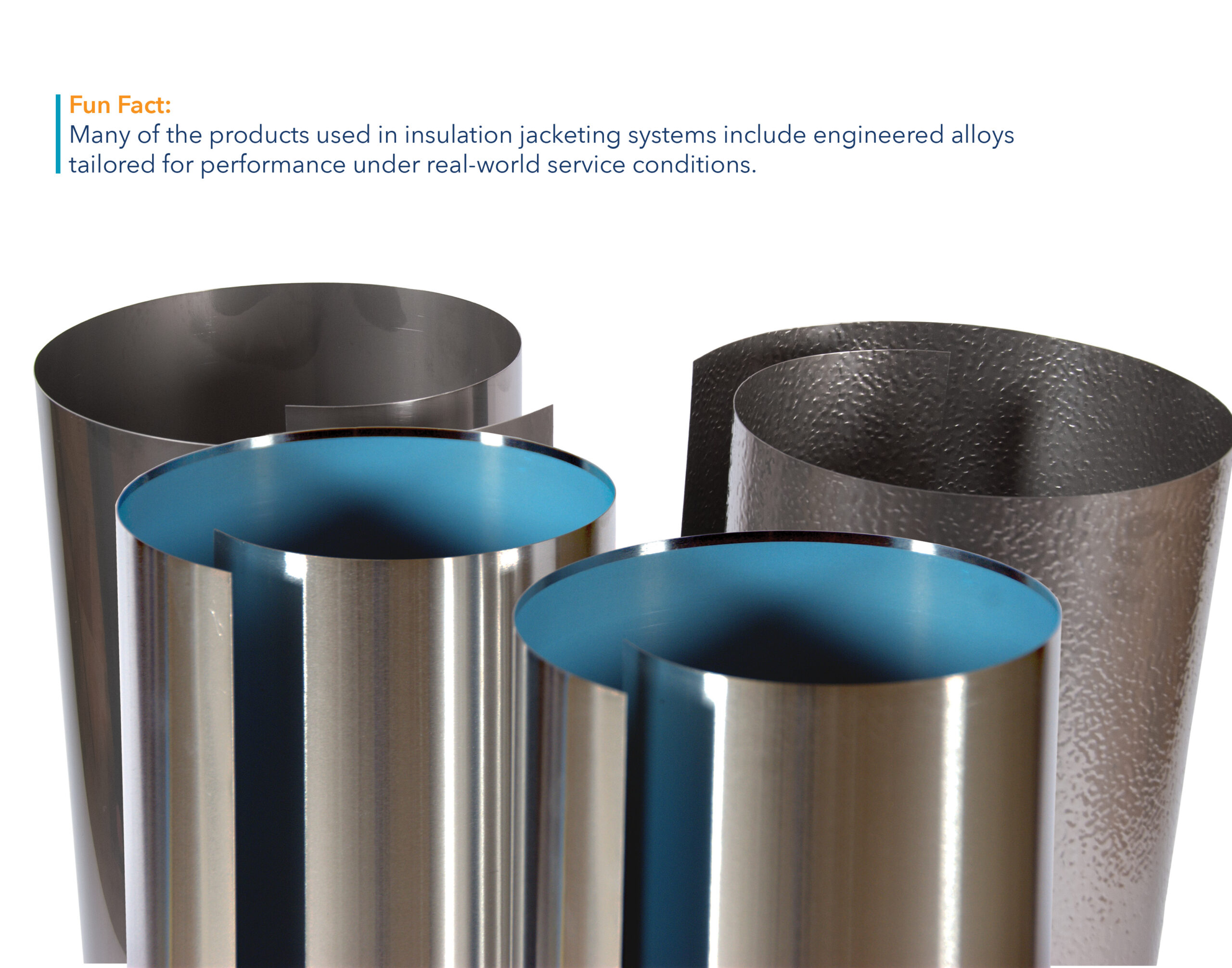
Fun Fact:
Many of the products used in insulation jacketing systems include engineered alloys tailored for performance under real-world service conditions.
Aluminum Alloys and Where They Are Used
Aluminum alloys build on the natural strengths of aluminum: light weight, corrosion resistance, and ease of fabrication. All while improving mechanical properties for specific uses.
Common aluminum alloy series include:
- 1000 Series – Nearly pure aluminum with strong corrosion resistance and excellent formability. Often used where strength requirements are modest and forming is a priority.
- 3000 series – Aluminum, alloyed with manganese, offers a strong balance of formability and corrosion resistance. It is widely used in mechanical insulation jacketing. At Ideal Products, most aluminum roll jacketing is made from 3003 and 3105 series aluminum.
- 5000 Series – Contains magnesium for enhanced corrosion resistance and strength. Widely used in applications exposed to moisture or outdoor environments.
- 6000 Series – Balanced strength and formability make these alloys common in structural components and extrusions.
- 7000 Series – Higher strength alloys, often used in aerospace and other specialized industries.
Aluminum alloys are commonly specified in mechanical insulation jacketing when lightweight performance, corrosion resistance, and ease of handling are key considerations for installation and service life.
Stainless Steel Alloys and Where They Are Used
Stainless steel alloys combine iron with chromium and other elements such as nickel or molybdenum to create superior corrosion resistance and mechanical strength. Different stainless steel families are used depending on environment and performance needs:
- 300 Series – The most widely used stainless alloys in insulation jacketing, including grades like T-304 and T-316. These offer corrosion resistance across a broad range of conditions.
- 400 Series – Ferritic stainless steels with good corrosion resistance and strength, often used where specific performance requirements fit these characteristics.
- Duplex and Specialty Grades – Designed for higher strength or more aggressive environments.
Stainless steel alloys are commonly selected for corrosive environments, coastal or marine exposure, chemical processing facilities, and high-temperature applications where a longer service life is critical.
Alloy Selection in Application
The choice between aluminum and stainless steel alloys depends on the environment and performance targets:
- Corrosion Environment – Aluminum alloys perform well in many outdoor environments, but stainless steel offers enhanced corrosion resistance in more aggressive chemical or marine conditions.
- Strength Requirements – Some stainless steel alloys provide higher mechanical strength than many aluminum alloys, which can be an advantage in heavy-duty applications.
- Temperature Exposure – Stainless steel alloys maintain structural integrity at higher temperatures, making them suitable where heat resistance is required.
- Fabrication and Finish – Both materials accept a variety of finishes to improve performance and aesthetics. Aluminum alloys are often anodized or coated, while stainless steel is available in smooth, embossed, or corrugated finishes, depending on project need.
Why Alloy Matters
Selecting the right alloy is not simply a matter of picking a metal. Alloy composition changes performance in measurable ways, affecting installation, service life, and overall durability. For projects with specific environmental challenges or service expectations, understanding alloy behavior supports better decision making.
Looking Ahead: Stainless Steel vs. Aluminum
Both aluminum and stainless steel alloys contribute to mechanical insulation solutions. In our next blog Ringside Report: Comparing Aluminum and Stainless Steel for Your Systems, we will examine these materials side by side, weighing cost, performance, and application suitability to help you make the best specification choices.
If you are curious about alloys or which products are right for you, our sales team can help:
USA: 1.888.877.7685
CAN: 1.800.299.0819