 1.800.299.0819
 1.888.877.7685
Lightweight, durable, and naturally resistant to corrosion, aluminum has quietly become one of the most important metals in the world. From its unique physical properties to its environmental benefits, aluminum offers a balance of strength, efficiency, and sustainability. In this blog, we will explore the history of aluminum, why it’s so widely used, and why it deserves a place in your next project.
A Brief History of Aluminum
Aluminum hasn’t always been the common, cost-effective metal we know today. In fact, when it was first discovered in the early 19th century, aluminum was considered more precious than gold! Its light weight and resistance to corrosion made it a material of fascination. However, the process of extracting it from ore was expensive and inefficient.
That changed with the advent of the Hall–Héroult process in 1886, which made large-scale extraction commercially viable. Suddenly, aluminum transitioned from a luxury to a staple of industrial use.
Fun Fact:
The Wright brothers mechanic, Charlie Taylor, used a custom aluminum alloy to build the engine block for the first powered flight in 1903. Since then, industries everywhere have been using aluminum to power their innovation.
Aluminum Today: An Alloy for Every Industry
Aluminum is everywhere, for good reason. In the U.S. and Canada, some of the biggest consumers of aluminum include:
- Transportation (automotive, aerospace, rail)
- Construction (windows, siding, curtain walls, HVAC)
- Packaging (especially beverage cans)
- Electrical (transmission lines, conductors)
- Consumer goods (electronics, appliances)
- Aerospace and Flight (commercial aircraft, satellites, spacecraft)
Its adaptability makes it one of the most widely used non-ferrous metals in North America.
Why Aluminum Stands Out
So what gives aluminum such broad appeal? Here are a few key properties that set it apart from other metals:
- Aluminum is an excellent conductor. While not as conductive as copper, aluminum is still widely used in electrical applications due to its lower weight and cost.
- High strength-to-weight ratio. Pound for pound, aluminum can match the strength of steel at just one-third the weight. This makes it ideal where performance and efficiency are key.
- Cost-effective material. With advances in processing and widespread availability, aluminum is an economical choice for both small and large-scale projects.
- Its lightweight nature makes it easier to transport, handle, and install, often leading to cost savings across the board.
- Aluminum is naturally corrosive-resistant. It forms a protective oxide layer that shields it from rust, even in harsh environments.
- Aluminum doesn’t degrade under UV rays, making it a solid option for outdoor applications.
- Aluminum melts at approximately 660°C (1220°F). High enough for structural integrity in many applications, but low enough to make it energy-efficient to cast, form, or recycle.
Finishes and Coatings
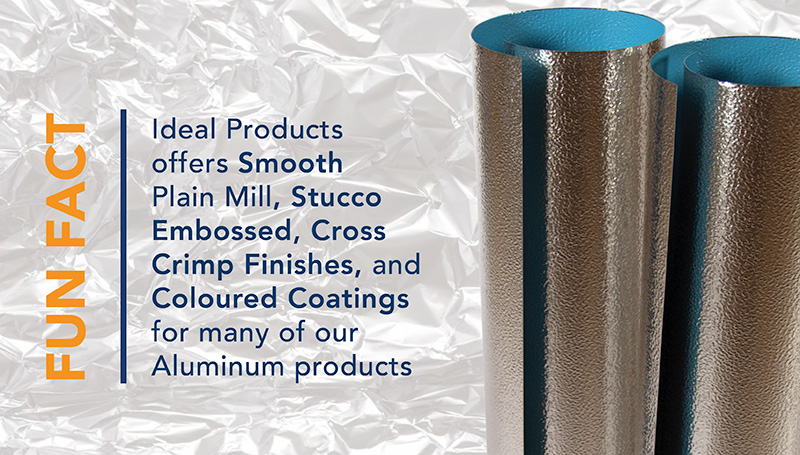
One of aluminum’s greatest advantages is how well it responds to surface treatments. Finishes and coatings not only enhance its appearance but also extend its performance in demanding environments. Aluminum can be treated with many different finishes and coatings, including:
- Anodized: An electrochemical process that thickens aluminum’s natural oxide layer for improved corrosion resistance and durability. It can also be dyed in various colours, making it common in architectural, transportation, and consumer applications.
- Chemical and Conversion Coatings: Used to improve corrosion resistance, paint adhesion, or conductivity. These finishes are widely applied in industrial, aerospace, and manufacturing environments.
- Painted or Powder Coated: Coloured finishes that combine protection and design flexibility. They offer strong weather and UV resistance, ideal for architectural panels, signage, and decorative elements.
- Textured and Embossed: Finishes like stucco or cross-crimp add rigidity and help mask minor imperfections while enhancing appearance. Common in cladding, jacketing, and building components.
Whether you’re aiming for durability, design appeal, or both, aluminum’s compatibility with various finishes makes it a flexible solution for diverse project requirements.
Environmental Advantages
As industries shift toward greener practices, aluminum is proving to be an environmental asset:
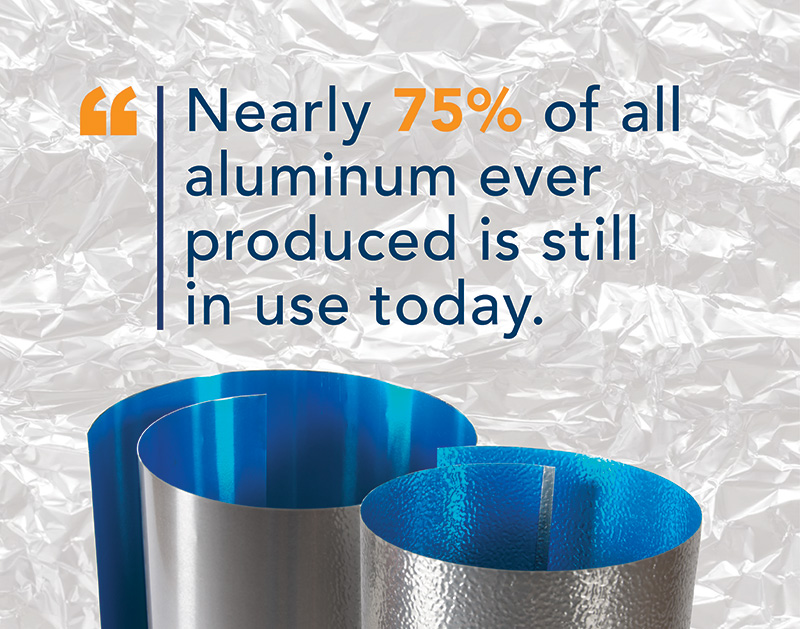
- 100% Recyclable: Aluminum can be recycled endlessly without losing its properties. In fact, nearly 75% of all aluminum ever produced is still in use today.
- Sustainable Building Material: In construction, aluminum contributes to energy efficiency goals by improving insulation and reducing structural weight.
Looking Ahead: Stainless Steel Spotlight
You won’t want to miss our next blog exploring aluminum’s heavier counterpart, Stainless Steel. Check back soon to learn about Stainless Steel’s vital role in our products.
If you’re curious about our aluminum products or wondering whether they’re the right fit for your project, our sales team can help:
USA: 1.888.877.7685
CAN: 1.800.299.0819